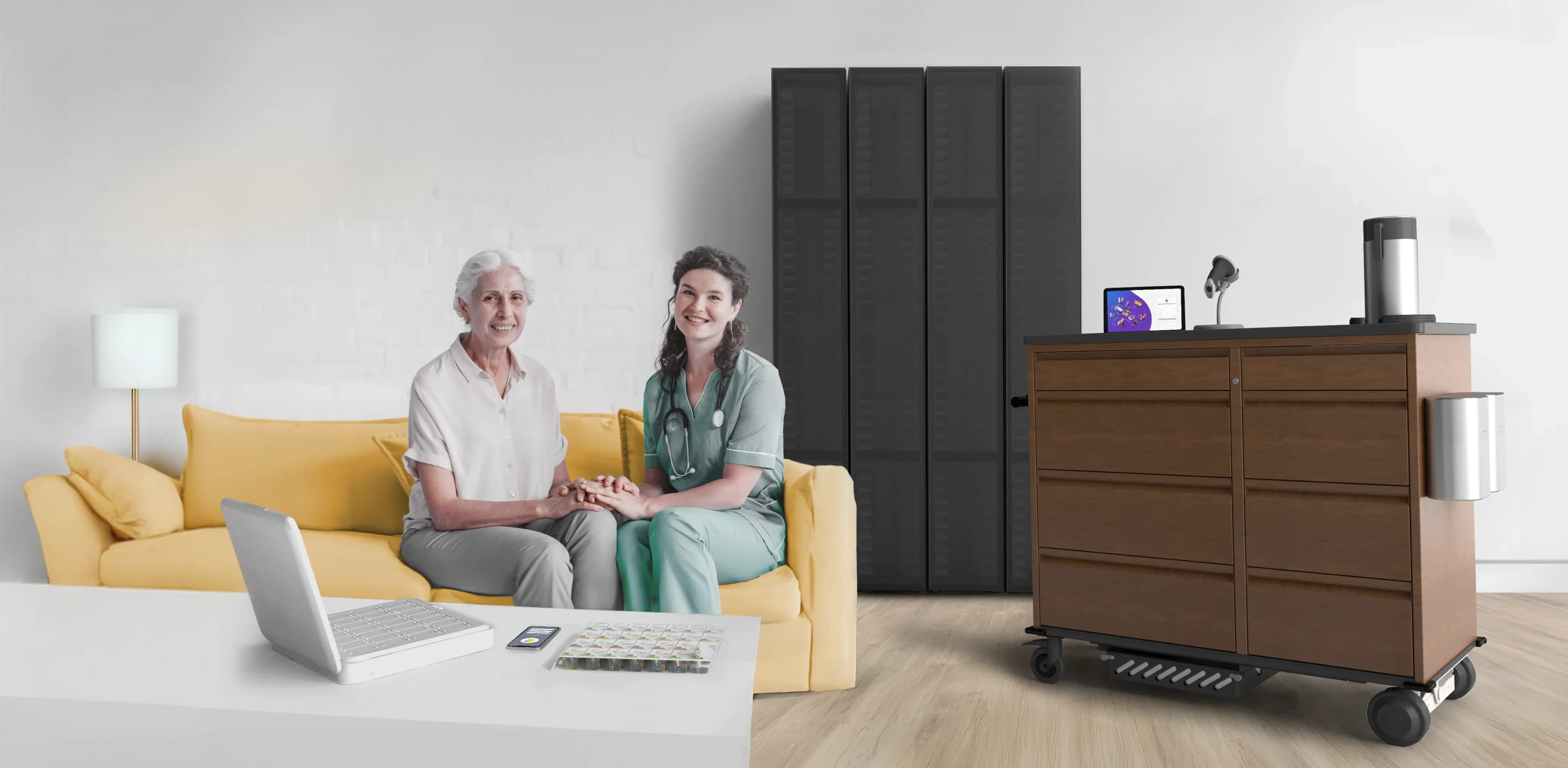
Explore the distinctions between independent living vs assisted living, including care levels, lifestyle, cost, and how DosePacker’s medication management tools support residents and caregivers.

Nearly 70% of seniors are expected to need some form of assisted living care later in life. With so many families facing this reality, understanding the differences between independent living and assisted living becomes more than a matter of convenience! It’s a crucial step in planning for comfort, safety, and quality of life.
While both options support aging with dignity, the level of day-to-day care, independence, and oversight can vary significantly. In this guide, we’ll explore the key differences between assisted and independent living and show how innovative tools, like DosePacker’s medication management solutions, can enhance the experience in either setting.
Independent living communities offer private residences and social programs for active seniors who manage their own daily routines, like medications, meals, and transportation.
By contrast, assisted living offers a supportive environment where residents receive help with daily living activities (ADLs), including bathing, grooming, and medication administration, alongside access to caregiver staff and safety features.
Thus, assisted living versus independent living boils down to two neighboring choices on the care spectrum: one emphasizes self-direction, while the other emphasizes hands-on assistance.
Feature | Independent Living | Assisted Living |
|---|---|---|
Primary Resident Needs | Active and autonomous adults | Individuals requiring regular help with ADLs |
ADL Support | No staff support, may arrange outside help | On-site help with bathing, dressing, mobility, and medication |
Medication Handling | Fully self-managed, with optional reminders | Staff-assisted with daily tracking and administration |
Accommodation Layout | Independent apartments with kitchens | Accessible units designed for safety and convenience |
Staff Availability | On-call support | 24/7 trained caregivers on-site |
Estimated Monthly Cost |
Choosing between independent living and assisted living is rarely about which is better; it’s about which environment best matches your loved one’s current capabilities and evolving needs.
Both models support older adults in living fulfilling lives, but they differ significantly in the level of day-to-day assistance available. While independent living is geared toward seniors who value freedom and minimal intervention, assisted living is built for those who may need help with daily activities but still want to maintain a level of independence. To make the right decision, it’s essential to assess your loved one’s physical health, emotional well-being, and future care needs.
Understanding the difference between assisted and independent living means recognizing when support needs grow beyond convenience and become essential for overall well-being.
The way each community handles medications often makes the biggest difference in day-to-day experience:
Whether selecting independent or assisted care, medication is rarely “set and forget.” DosePacker’s smart medication management is designed to fit both lifestyles:
By reducing manual errors and logging every dose, DosePacker enables caregivers to focus on personal interactions rather than paperwork.
Independent living apartments feature full kitchens, ample space, and freedom of choice, providing areas where residents can cook, entertain, and customize their living spaces.
Assisted living takes accessibility seriously: single-level layouts, safety handrails, lowered thresholds, and emergency systems ensure residents move safely throughout the day.
Communal areas in assisted living, located near private units, serve as hubs where caregivers can easily monitor and engage with residents, without restricting their daily choices.
In the U.S., Independent living averages around USD 3,100/month, whereas assisted living averages USD 5,350/month as of 2023.
Key cost variables include:
Families who plan ahead can better manage costs and choose communities that adapt as their loved one’s needs evolve.
Some senior living campuses offer a full continuum of care, providing independent living, assisted living, memory care, and skilled nursing services all on-site. This model supports aging in place:
If you’re comparing care intensity, consider this deeper dive: Assisted Living vs Skilled Nursing Facility
Ask these essential questions when touring communities:
Knowing the answers ensures you’re comparing substance, not just style!
The choice between assisted living vs independent living isn’t “which is better”, it’s “which suits their current lifestyle and can adapt over time.”
DosePacker’s medication management solutions support both models, promoting independence, reducing errors, and allowing caregivers to focus on care.
Whatever your choice, the priority is simple: a place where safety, connection, and respect are always front of mind!
To see how DosePacker optimizes care with smart solutions, contact us today!