Discover common dementia care mistakes, medication error stats, and how DosePacker’s smart medication packaging can help caregivers provide safer care.

Dementia affects more than 6 million Americans, touching countless families and caregivers every day. If you’re caring for a loved one with dementia, you know it’s a journey full of challenges, emotions, and constant learning. It requires patience, compassion, and careful attention, especially when managing medications, as even minor mistakes can have severe consequences.
In this blog, we’ll explore some of the most common dementia care mistakes, with a special focus on medication errors that impact so many people. We’ll also demonstrate how intelligent medication management solutions can help caregivers minimize errors and deliver safer, more effective care. Because at the heart of it, it’s all about supporting both you and your loved one through this journey with confidence.
Dementia changes the way a person thinks, remembers, and behaves. Because of this, their needs can shift quickly, and caregivers must adapt quickly. Small mistakes can turn into big problems if you’re not careful.
Here are some of the most frequent slip-ups caregivers run into:
It’s tempting to focus only on symptoms, but dementia doesn’t erase a person’s likes, dislikes, and personality. Treating them like a unique individual, someone who deserves respect and dignity, makes a world of difference.
Dementia often makes it hard to understand or express thoughts. Talking too fast, using complicated words, or ignoring attempts to communicate can cause frustration. Simple, calm, and straightforward language fosters trust and understanding.
When a person with dementia gets upset, it’s rarely just because they want to be difficult. They might be in pain, confused, scared, or uncomfortable. Understanding the reasons behind behaviors helps you respond with empathy.
Failing to adapt the living space to reduce the risk of falls or prevent wandering can cause injuries and emergencies. Proper lighting, removing tripping hazards, and installing safety locks are crucial.
Managing medications can be tricky, even for healthy adults. But people with dementia are particularly vulnerable to medication mistakes, which can exacerbate cognitive decline or cause serious harm.
Medication errors happen more often than you might think. According to medication error stats, medication mistakes affect millions annually, especially in places like nursing homes and assisted living facilities where many dementia patients reside.
Common medication mistakes include:
These errors can lead to hospital visits, exacerbate symptoms, or even become life-threatening. To know more, read this blog on medication errors in skilled nursing and assisted living.
Managing medications for someone with dementia can be complicated and stressful. Multiple prescriptions with different doses and timing make it easy to make mistakes. That’s why medication packaging solutions from DosePacker are so helpful.
DosePacker provides pre-sorted, clearly labeled compliance packs organized by dose and time of day. This helps both caregivers and patients know exactly what to take and when, reducing confusion and the risk of errors. It simplifies complex medication routines, making it easier to stick to prescribed schedules and avoid missed or doubled doses.
Beyond reducing mistakes, these packs save caregivers time and effort, allowing them to focus more on providing quality care and support.
When you’re caring for someone with dementia, every little bit of help counts. DosePacker’s medication packaging isn’t just about organizing pills; it’s about making life a bit easier, safer, and less stressful for both you and your loved one. Here are some of the ways it can really make a difference:
Managing medications for a loved one with dementia can sometimes feel tricky and overwhelming. It’s totally normal to worry about making mistakes. The good news? There are straightforward, easy things you can do to keep everything on track and make things less stressful for you and your loved one.
Here are some easy ways to keep medication errors at bay:
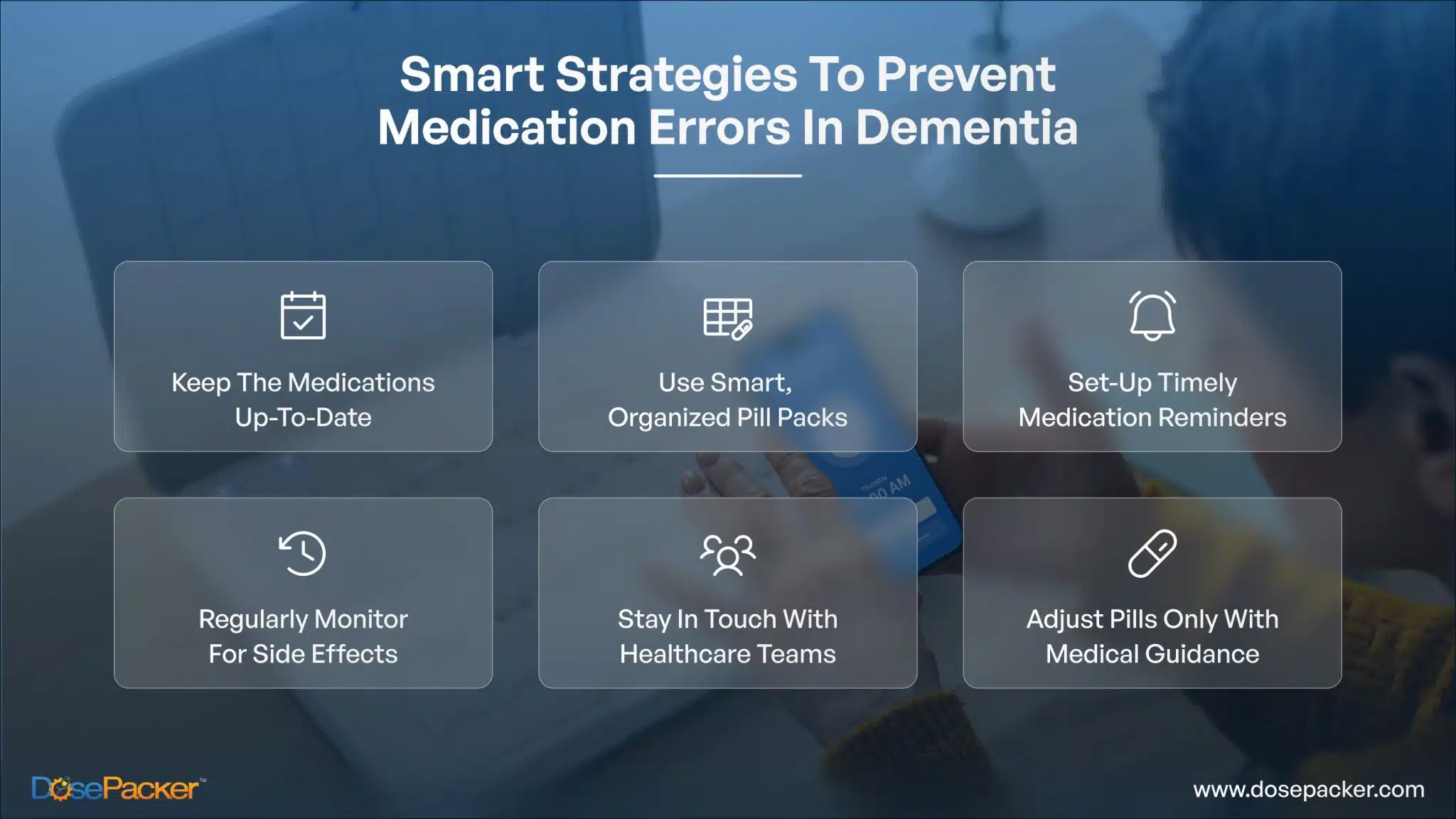
Keep a current and detailed list of all medications your loved one takes, including prescription drugs, over-the-counter medications, and supplements. Remember to include dosages, timing, and the reason each medication is being administered. Also, make sure that these medications are regularly reviewed by all healthcare providers and caregivers involved in the person’s care. Having an accurate medication list is one of the most effective ways to prevent dangerous drug interactions or duplicate prescriptions.
Organized medication packaging, such as DosePacker’s compliance packs, can make a significant difference in daily care. These packs clearly label each dose by day and time, which helps eliminate confusion, reduce errors, and ensure that medications are taken as prescribed. When dealing with multiple prescriptions, especially those with complex schedules, having everything pre-sorted removes the guesswork. It reduces the risk of skipped or double doses, which is especially important in dementia care.
Even the most attentive caregivers can miss a dose during a busy day. Setting reminders through alarms, phone apps, or smart devices can help ensure medications are taken at the right times. DosePacker’s smart reminder solutions offer helpful audio-visual alerts that prompt action when a dose is due. These reminders are especially useful when routines are disrupted or when care is shared among multiple people, offering extra peace of mind that nothing has been missed.
People with dementia may not always be able to explain how they feel, so it’s important to closely observe for any physical or behavioral changes after starting or changing a medication. Symptoms such as increased confusion, unusual drowsiness, agitation, or loss of appetite could be signs of a severe reaction. If something seems off, make a note of it and consult the healthcare provider promptly. Monitoring closely helps catch issues early and ensures that medications are working as intended without causing harm.
Don’t be afraid to ask questions or speak up during medical appointments. Ensure you understand the purpose of each medication, its recommended dosage, and potential side effects to be aware of. Let your loved one’s care team know if any issues arise, such as missed doses or suspected side effects, and always consult with them before making any changes to the medication routine. Open and ongoing communication ensures that care remains safe and coordinated.
Never stop or change a medication suddenly without medical advice, even if you think it’s not helping or seems to be causing issues. Abruptly stopping medications can lead to severe withdrawal symptoms or worsening health. If a medication needs to be stopped or adjusted, it should be done gradually under the supervision of a doctor. Following a safe and monitored approach helps keep your loved one stable and reduces the risk of complications.
While managing medications is super important, remember that dementia care means looking at the whole person. A holistic approach includes:
DosePacker’s integrated solutions empower caregivers not only to manage medications efficiently but also to focus more on quality of life and compassionate care.
Caring for someone with dementia is tough, and mistakes happen. However, understanding where the most significant risks lie, such as medication errors, and implementing smart solutions can make a real difference. DosePacker’s medication packaging and reminder systems help take the guesswork out of managing medication routines, making care safer and easier.
If you or someone you love is managing dementia, consider these tips and explore how DosePacker can support your caregiving journey.
Contact us today to know how DosePacker can make your journey easier!