From pumpkin decorating to themed trivia, explore Halloween ideas that keep seniors engaged, connected, and smiling throughout the season.
Halloween isn’t just for trick-or-treaters anymore. With more than 30,000 assisted living communities across the United States serving residents who deserve festive celebrations year-round, Halloween has become one of the most anticipated holidays in senior care settings.
Whether you’re planning activities for a senior living facility, hosting a multigenerational gathering, or supporting aging loved ones at home, Halloween offers the perfect opportunity to build connections, spark creativity, and create lasting memories.
The right Halloween activities can offer therapeutic benefits that extend beyond simple entertainment, from cognitive stimulation through themed games to social connection through group celebrations.
Make medication management simple this Halloween season.
Halloween celebrations in senior living communities deliver measurable benefits. Social activities combat isolation, themed events provide cognitive stimulation, and festive gatherings create opportunities for intergenerational bonding that lifts spirits across all age groups.
For seniors managing multiple health conditions and medications, maintaining social engagement and mental stimulation plays a critical role in overall well-being. Halloween activities provide structure, purpose, and joy during a season that can otherwise feel routine.
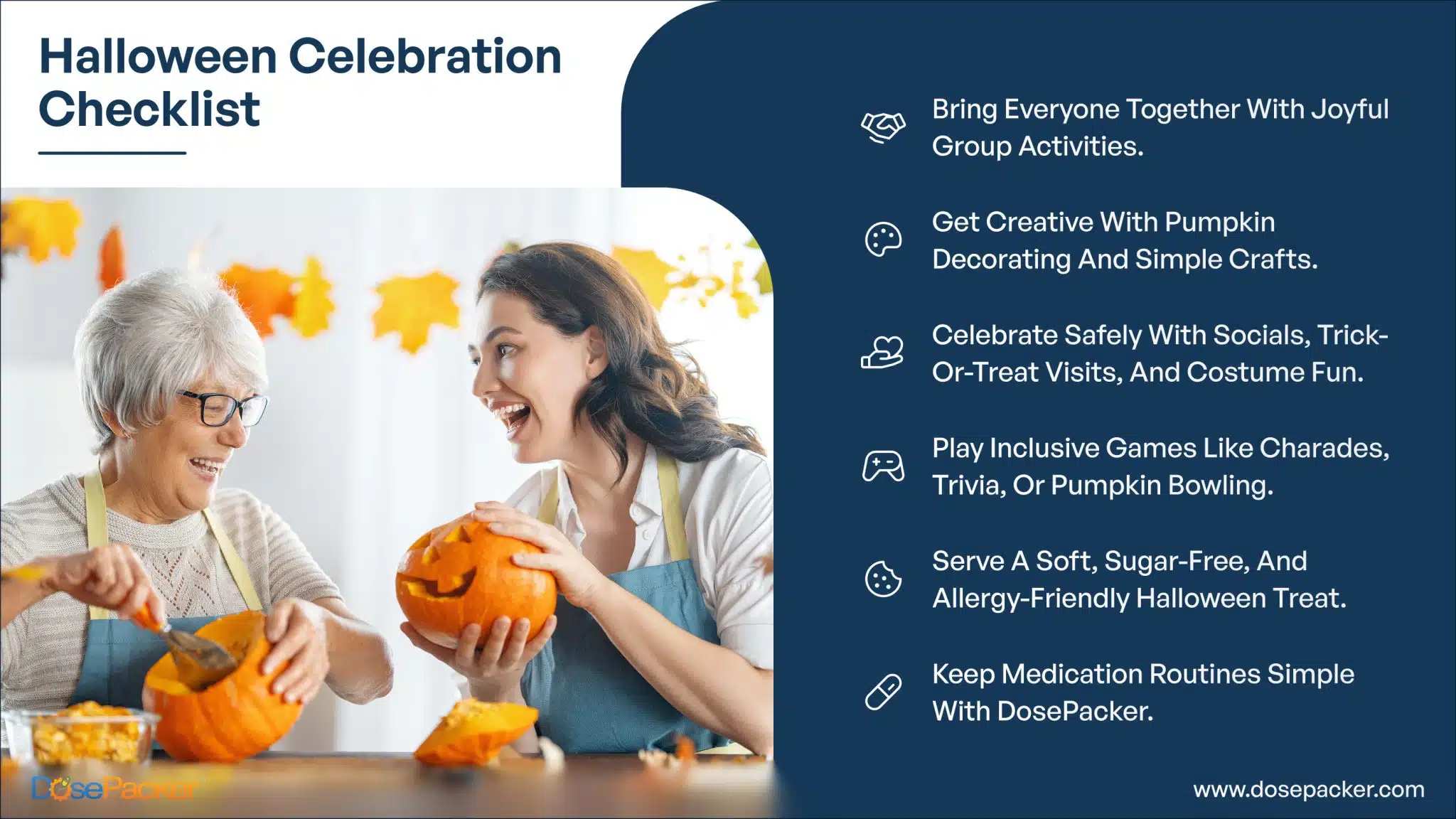
Crafts offer seniors hands-on creative expression while accommodating a range of ability levels. These projects work well for individuals with arthritis, limited dexterity, or mobility challenges.
Swap sharp carving tools for paint pens, stickers, and markers. Seniors can safely personalize pumpkins. This activity works beautifully for group settings where each participant creates their own design to display in common areas or outside their rooms.
Provide foam stickers, adhesive gems, and pre-cut felt shapes for easy application. For residents with cognitive challenges, offer stencils to trace simple Halloween shapes, such as stars, moons, and cats.
Fill small fabric pouches with seasonal scents, such as cinnamon, cloves, and pumpkin spice potpourri. This sensory activity engages multiple senses and produces keepsakes that residents can keep in their rooms. The familiar scents can trigger positive memories and create a comforting atmosphere reminiscent of the autumn season.
Encourage residents to craft decorative garlands for hallways or create door decorations for a community-wide contest. Simple materials, such as construction paper, string, and markers, allow for creativity without complexity. Bat and ghost garlands, glow-in-the-dark designs, and jack-o-lantern chains add festive flair to any space.
Create a festive atmosphere with adaptable party themes that bring residents, families, and staff together in every type of care environment.
Transform your common area into a Halloween celebration space with orange and black decorations, themed music, and festive refreshments. Keep the atmosphere fun rather than frightening; research shows that scary elements can cause anxiety for individuals with dementia or cognitive decline.
Enjoy classic Halloween songs mixed with familiar dance music from the 1940s to the 1960s. Offer both alcoholic and non-alcoholic versions of festive drinks like “witch’s brew” punch or “magic potion” mocktails.
Invite local schools or family members to participate in a safe trick-or-treat experience within the facility. Set up stations throughout the building where children collect treats from participating residents. This brings youthful energy into the community, providing seniors with meaningful interactions with younger generations.
For residents with limited mobility, bring the trick-or-treaters directly to their rooms for personal visits. The smiles and excitement from children in costumes can brighten any resident’s day.
Host costume competitions with categories that don’t require elaborate preparations. Consider awards for “Most Creative Use of Props,” “Best Hat,” “Funniest Accessory,” or “Most Colorful Outfit.” This enables everyone to participate, regardless of their budget or physical ability.
Provide costume accessories like witch hats, silly glasses, and festive scarves for residents who don’t have their own costumes. Simple participation makes the event inclusive and enjoyable for all.
Encourage laughter and connection with inclusive games designed for individuals with varying mobility levels and cognitive abilities.
This classic game adapts perfectly for Halloween with spooky-themed words like “witch,” “haunted house,” “full moon,” and “black cat.” Participants can act out characters while others guess, creating laughter and engagement without requiring physical exertion.
For residents with mobility limitations, allow seated participation where players use hand gestures and facial expressions rather than full-body movements.
Set up lightweight bowling pins (or empty plastic bottles painted like ghosts) and use small pumpkins as bowling balls. This seated activity provides gentle physical activity while maintaining the competitive fun of traditional bowling.
Adjust distances and scoring to suit participants’ abilities, keeping the game challenging yet achievable for everyone.
Test knowledge of Halloween history, traditions, and pop culture with trivia questions that span multiple decades. Include questions about classic Halloween movies, candy history, and costume trends from different eras.
Sample questions include:
These questions engage long-term memory and create opportunities for residents to share personal Halloween stories from their youth.
Festive events can disrupt daily routines, including medication schedules. For seniors taking multiple prescriptions at specific times, Halloween parties and activities need to accommodate these essential health requirements rather than replace them.
Innovative medication packaging systems help seniors maintain their regimen even during special events. Pre-sorted medications organized by date and time eliminate confusion, reduce errors, and provide peace of mind for both residents and caregivers during busy celebration days.
When planning Halloween activities, schedule them between medication times rather than during them. This allows full participation in festivities without compromising health management.
Delight residents with festive snacks and treats that are easy to prepare, allergy-friendly, and suitable for various dietary needs.
Many seniors manage diabetes, heart conditions, or other health issues requiring dietary modifications. Offer Halloween treats that accommodate these needs:
Create Halloween-themed snacks that look festive but remain nutritious:
These options deliver nutrition while maintaining the holiday spirit.
Start planning at least two weeks to secure supplies, coordinate with staff, and communicate schedules to residents and their families. Create a timeline that includes:
Keep medication schedules visible on all event calendars so residents know exactly when to take their prescriptions around party times. Reliable medication management becomes even more critical during holiday disruptions to everyday routines.
Ready to simplify medication management for your loved ones this holiday season and beyond?