The long-term care market is evolving rapidly. This blog breaks down 2026 market size data, care settings, emerging industry trends, and regulatory shifts impacting long-term care communities.

The long-term care market is experiencing unprecedented growth as aging populations and the prevalence of chronic diseases reshape healthcare delivery worldwide. Understanding current trends in long-term care is essential for providers, families, and industry stakeholders navigating this evolving landscape.
Finding the ideal partner, like DosePacker, with innovative solutions and a commitment to improving health outcomes, is essential. DosePacker ensures your long-term care community gets the attention and precision medication management it deserves.
Enhance long-term care with DosePacker.
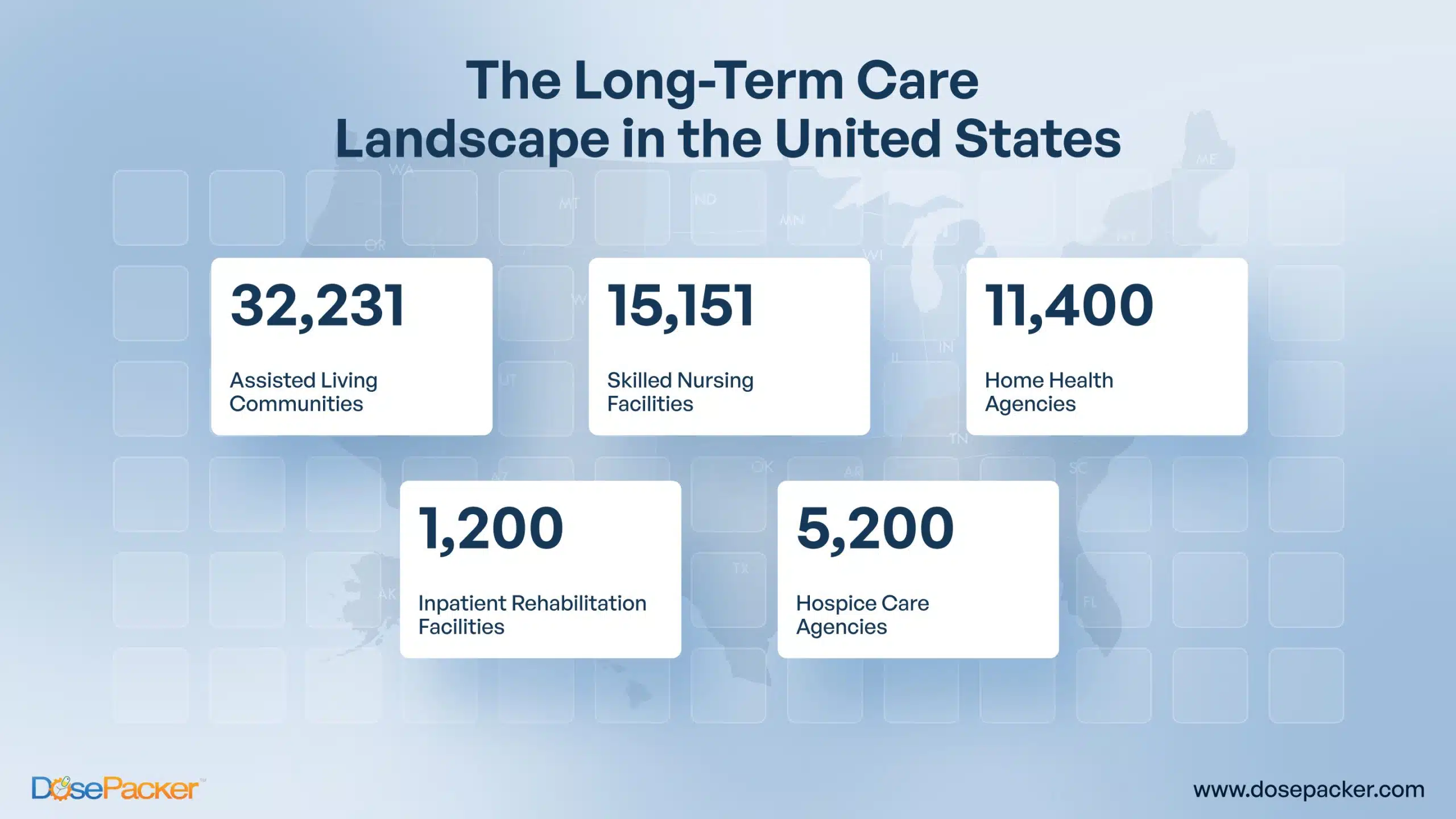
The global long-term care market size reached USD 1.11 trillion in 2023 and is projected to grow at a compound annual growth rate (CAGR) of 6.68% through 2030. This expansion reflects increasing demand across all care settings, as approximately 70% of people turning 65 will require long-term care services at some point.
Current U.S. market snapshot:
Long-term care serves diverse populations beyond seniors:
The long-term care market consists of a wide range of options:
Let’s dive right into what’s new in the ever-changing long-term care industry!
The WHO projects the global population aged 80 and older will triple between 2020 and 2050. Worldwide, an estimated 142 million seniors cannot meet basic needs independently. This demographic wave is fundamentally reshaping the long-term care industry trends across all service categories.
Gender disparities remain significant, with over 70% of long-term care community residents being women, who typically require services for extended periods due to longer life expectancies.
Digital transformation represents one of the most significant trends in long-term care. Medication management systems, electronic health records, telehealth platforms, and remote monitoring technologies are becoming standard rather than optional. These innovations address staffing challenges while improving care quality and reducing medication errors by up to 83%.
Healthcare worker shortages have emerged as a critical challenge, with turnover rates in long-term care facilities exceeding 50% annually in some regions. This staffing crisis directly impacts the quality of care and operational costs, driving investment in automation and efficiency-enhancing technologies.
Consumer preferences increasingly favor aging-in-place solutions over institutional settings. This trend is accelerating demand for home health services, with 94.4% of Hispanic patients currently using long-term care services, driven in part by cultural preferences for home-based care.
Growing recognition of diverse needs, including:
Green building certifications, energy efficiency programs, and sustainable operations are becoming competitive differentiators as facilities recognize environmental impact and operational cost benefits.
Programs of All-Inclusive Care for the Elderly (PACE) are expanding rapidly, offering coordinated care that keeps seniors in their communities longer while reducing costs.
Only 7.5 million Americans have long-term care insurance, despite 70% of seniors eventually needing services. This coverage gap creates significant financial vulnerability, as Medicare covers only limited skilled nursing care and Medicaid requires asset depletion.
Long-term care insurance industry trends show declining policy sales but increasing hybrid products combining life insurance with long-term care benefits, reflecting evolving consumer preferences for flexible coverage options.
Post-COVID improvements include:
Recent CMS rule changes emphasize:
Medication management remains a critical challenge, with non-adherence contributing to 125,000 deaths annually and $100 billion in preventable costs. Advanced solutions like compliance packaging, automated dispensing systems, and integrated software platforms address these challenges while improving efficiency.
Smart medication carts with integrated technology reduce administration time while improving accuracy. Mobile applications enable family caregivers to coordinate care remotely, increasing transparency and family engagement. DosePacker offers a complete ecosystem of medication management solutions designed specifically for long-term care communities.
The convergence of demographic pressures, technological advancement, and changing consumer preferences will continue reshaping the long-term care market through 2030 and beyond. Success will require:
Understanding these trends in long-term care positions providers, policymakers, and families to make informed decisions in an increasingly complex healthcare landscape. As the industry evolves, the focus remains on delivering compassionate, effective care that honors individual dignity while achieving sustainable operational models.