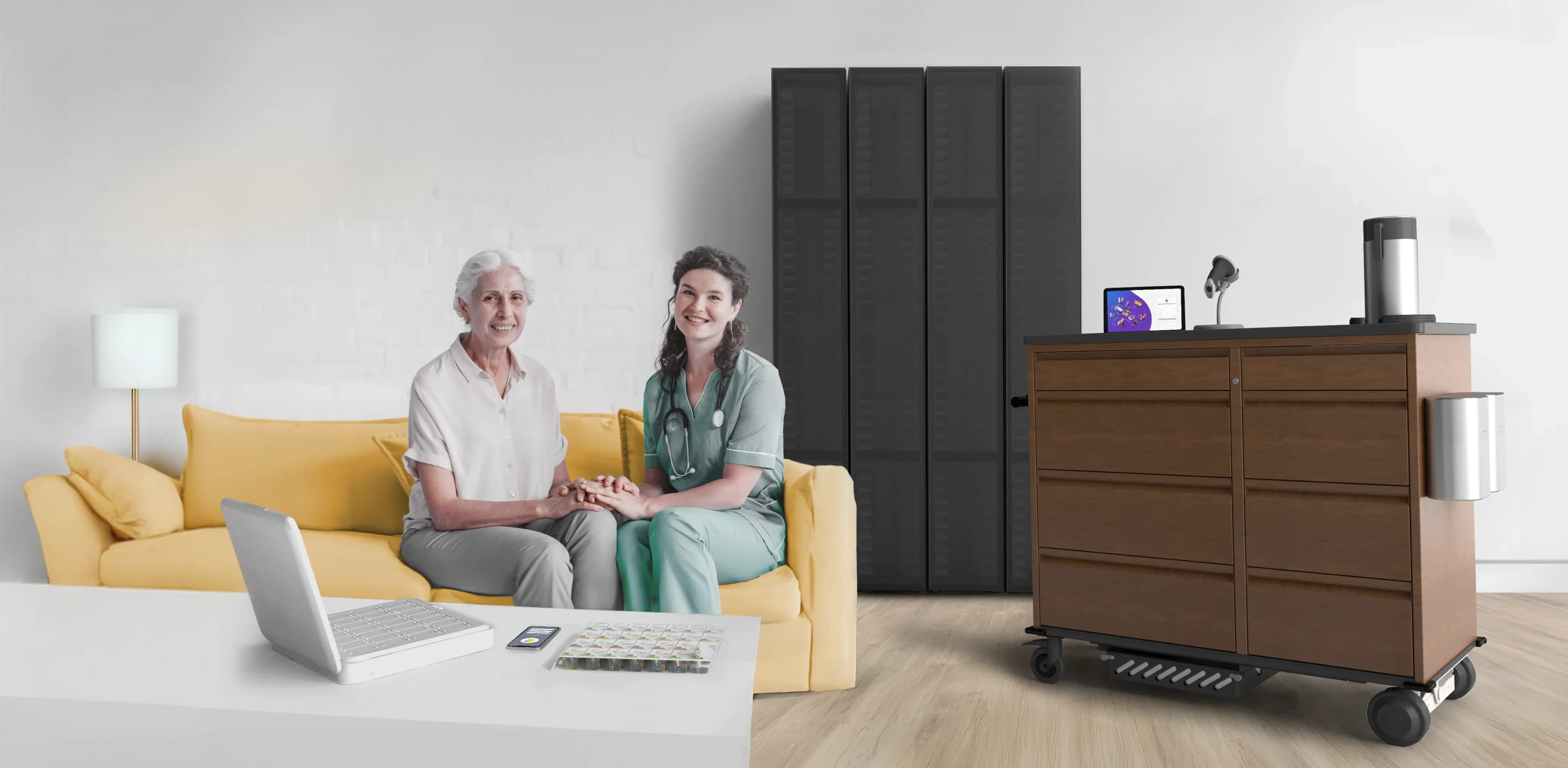
Medication management in senior living involves hundreds of decisions every day. Learn how medication management technology helps communities reduce risks, support caregivers, and create safer workflows.

Eleanor has lived in the same assisted living community for four years. At 78, she takes nine medications a day across four different administration times. On paper, her routine looks simple: the right medication, the right resident, the right time, and a signature confirming it was given.
In reality, every med-pass involves a complex chain of decisions. A prescription changes. A caregiver starts a new shift. Instructions are updated. A dose needs to be held. Each step depends on having accurate information at the right moment.
Eleanor’s experience reflects the reality of medication management in senior living communities today. A recent study on medication safety in residential aged care found that 35% of residents experienced at least one reported medication incident during their stay, and 53% of these incidents occurred during medication administration. This highlights how vulnerable even routine medication workflows can become when they depend on multiple manual steps.
The challenge is not caregiver commitment. It is the complexity of managing hundreds of medication decisions every day. This is where medication management technology is transforming senior living medication management, helping communities verify medications, improve documentation, and build safer workflows that support better resident outcomes.
As residents age, medication needs rarely stay the same. A prescription may change, a new condition may require additional medication, or an existing medication may need adjustment based on a resident’s response.
For senior living teams, this creates a constantly moving process. They must:
The challenge becomes even greater as communities support residents with multiple chronic conditions.
Managing several medications with different instructions, timing requirements, and monitoring needs requires a coordinated system that can adapt as care changes.
This is where traditional workflows often begin to show their limitations. Paper-based records, manual documentation, and disconnected systems can make it harder to maintain visibility across the entire medication journey, from dispensing to administration.
A connected approach to senior living medication management gives care teams the tools to track changes, verify each step, and maintain a clearer picture of resident care, a priority increasingly reflected in senior living trends.
Medication management technology doesn't replace the caregiver’s role. It strengthens every step that supports safe medication administration, from organizing doses to verifying delivery and documenting care.
Instead of relying on multiple manual checks across different systems, connected medication management solutions bring important information together and create a more reliable workflow for senior living teams.
One of the biggest challenges in medication administration is ensuring the right resident receives the right medication at the right time. Technology adds another layer of verification through tools such as barcode scanning, QR codes, resident identification, and digital medication records.
Before administering a medication, caregivers can confirm the dose matches the resident’s current medication plan. This reduces the chance of errors caused by outdated information, similar-looking medications, or manual mix-ups during busy medication passes.
Documentation is critical to medication safety, but recording information after the fact can create gaps between what happened and what is recorded.
With digital documentation, staff can track each administration at the point of care, creating a clearer record of completed doses, missed doses, and medication changes, much like the shift toward eMAR in senior living.
For residents managing multiple medications, sorting and organizing doses manually adds another layer of complexity. Compliance packaging simplifies this process by grouping medications according to resident, date, and administration time.
With clearly labeled doses, medication images, and organized packaging, caregivers spend less time sorting medications and more time focusing on resident needs. Medication management technology solutions connect physical medication organization with digital verification and documentation.
Together, these tools create a more consistent medication workflow; one where every step is easier to follow, easier to verify, and easier to manage across the entire senior living community for medication management.
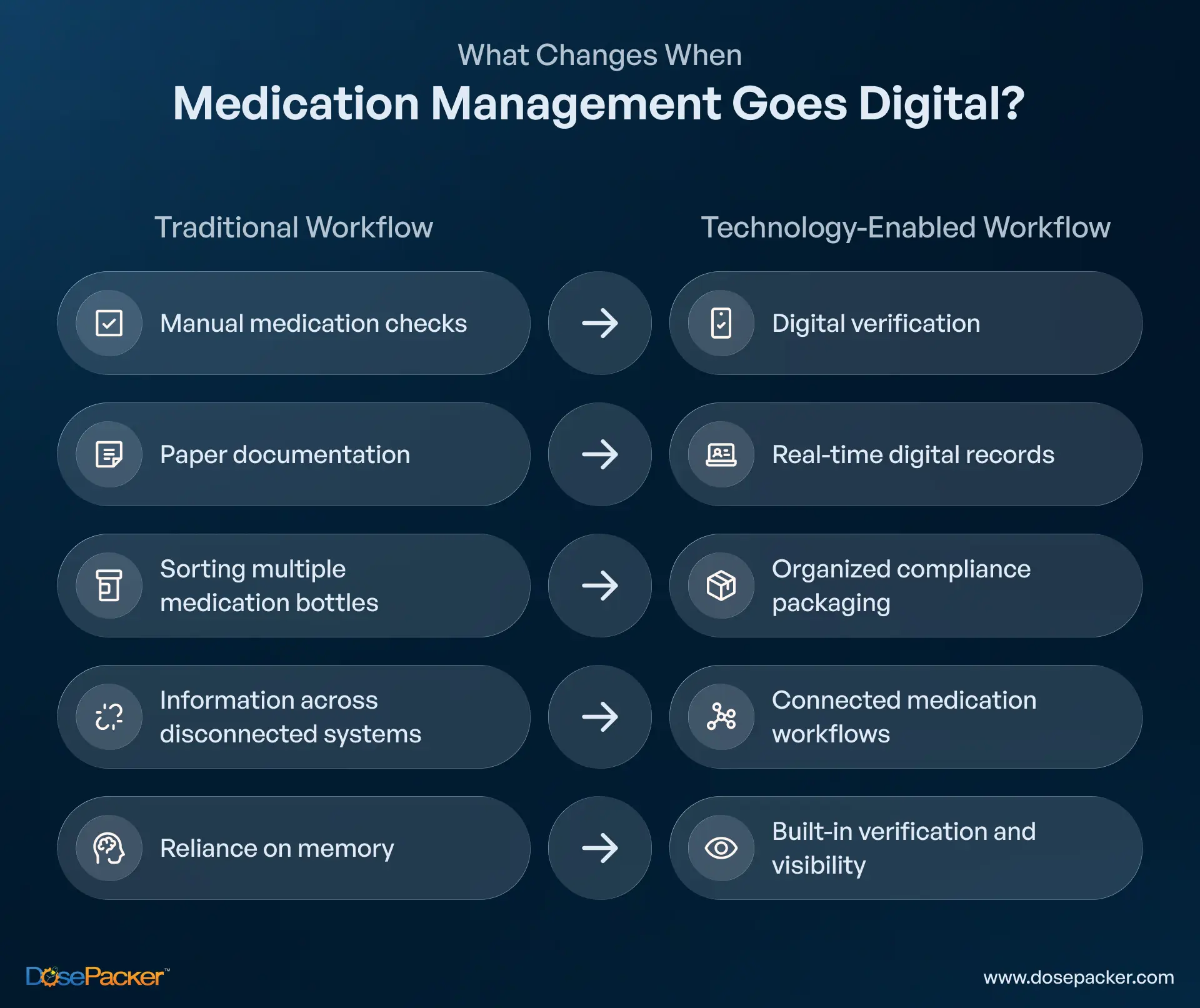
The true value of medication management technology is not simply having more digital tools. It is creating a workflow where every step of medication care works together, from pharmacy preparation to caregiver administration and resident documentation.
This is where DosePacker helps senior living communities move from fragmented medication processes to a more connected approach.
For caregivers managing multiple residents, sorting medications from individual bottles can add unnecessary complexity to an already demanding workflow.
DosePacker’s compliance packaging organizes medications by resident, administration time, and schedule, helping caregivers quickly identify what each resident needs and when. Each package includes clearly labeled doses, medication images, and organized information that supports safer administration.
By reducing manual sorting and improving visibility at the point of care, compliance packaging becomes more than a container; it becomes part of a safer medication workflow.
Medication safety does not end when a dose is delivered. Accurate documentation is essential for understanding what was administered, when it was given, and whether any issues occurred.
Through connected solutions such as MyDoses and CareCommunityOS, DosePacker helps create a more complete view of medication administration. QR-code scanning and digital records help caregivers document activities in real time, giving care teams better visibility into resident medication patterns.
This allows communities to identify concerns earlier, whether it is a missed dose, a medication refusal, or a change that requires follow-up.
For residents like Eleanor, the impact isn't the technology itself. It is about knowing that every caregiver has access to accurate information, every medication has been verified, and every dose is part of a consistent process.
With more than 560,000 compliance packs delivered across 350+ care communities, DosePacker helps pharmacies and senior living teams build medication workflows that are easier to manage, easier to verify, and designed around better resident outcomes.
Not every senior living community has the same medication workflow. A small assisted living community may have different needs than a larger organization managing multiple care levels, higher resident acuity, and more complex medication schedules.
The right medication management solutions should not simply add another system for staff to manage.
Look for solutions that:
Technology works best when it supports how caregivers already deliver care. A solution that requires multiple disconnected steps or duplicate documentation can create frustration instead of improving efficiency.
Communities should look for systems that connect medication preparation, administration, verification, and documentation into one streamlined process.
Resident needs change over time. Medication schedules become more complex, care requirements evolve, and communities must adapt without rebuilding their entire workflow.
Scalable medication management technology allows teams to support changing resident populations while maintaining consistency and accuracy.
Medication documentation is not only important for resident safety; it also supports operational accountability. Accurate records, clear audit trails, and consistent processes help communities stay prepared as regulatory compliance matters in senior living continue to evolve.
The best solutions do not simply record what happened. They help create a more reliable process where safer medication practices become part of everyday care.
Eleanor does not think about barcode verification, digital documentation, or medication management platforms. She thinks about whether she received the right medication, whether her care team has the information they need, and whether someone will notice if something changes.
That is the true measure of successful senior living medication management.
Technology is not replacing the caregivers who know residents best. It is giving them the tools to work with greater confidence: reducing manual steps, improving visibility, and creating more consistent medication workflows across the community.
For senior living operators, the goal is not simply adopting new technology. It is building a system where every dose can be verified, every medication change can be tracked, and every resident receives the support they need to stay safe and healthy.
With the right medication management technology solutions, communities can move beyond managing medications as a daily responsibility and create a more connected approach to resident care.
Because behind every medication record is a resident who depends on that process working, every single day.