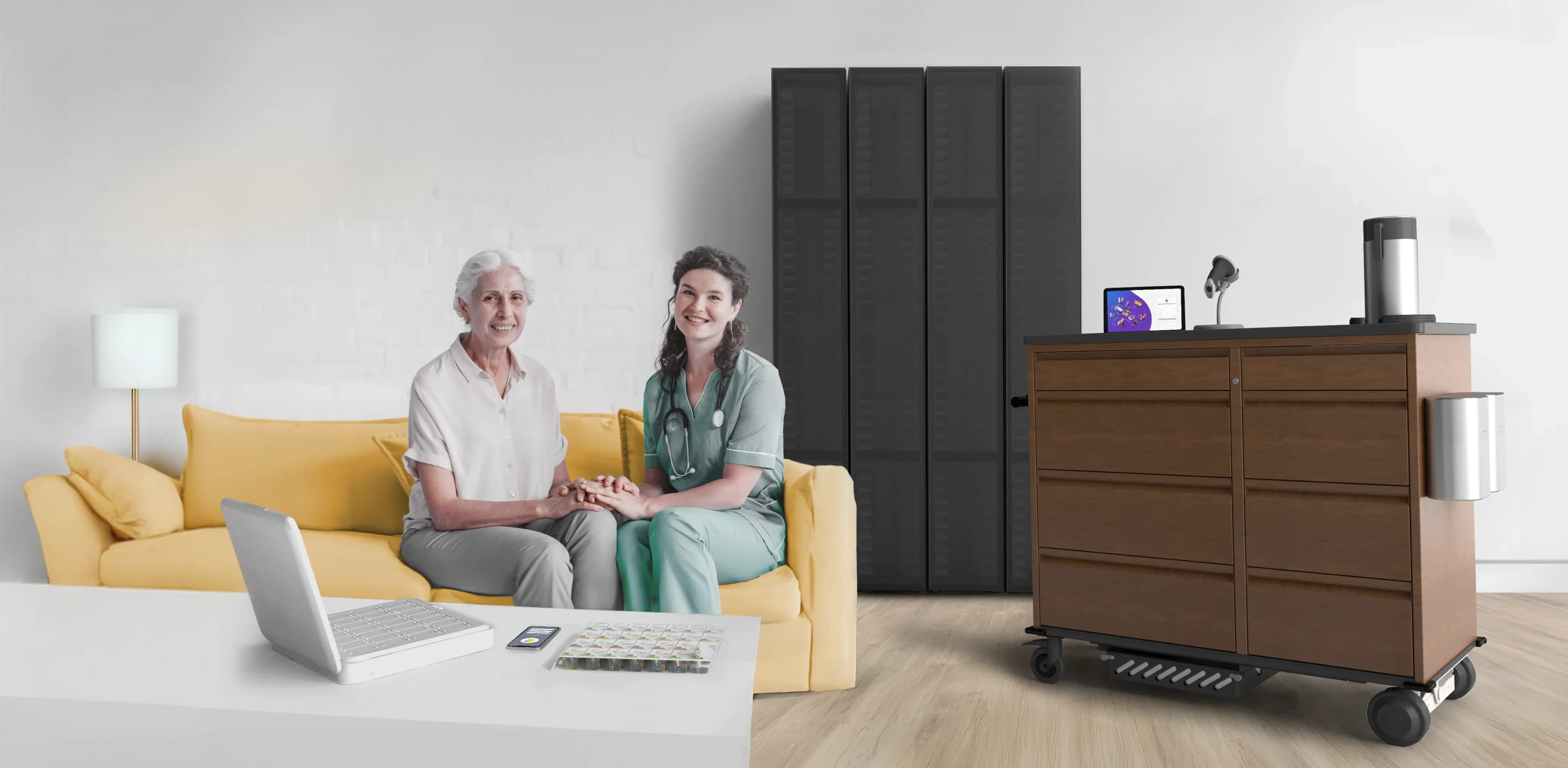
Stretched thin as a caregiver? Learn how to prevent caregiver burnout with practical tips, early signs to watch for, and tools to support your well-being.
Caring for others can be one of the most rewarding things you do, but it can also be an easy path to exhaustion. According to the Centers for Disease Control and Prevention (CDC), one in five U.S. adults provides care to family members with chronic health conditions or disability, and over half of them are experiencing mental health symptoms, including anxiety and depression, a sign of just how common caregiver burnout is.
Caregiver burnout isn’t just feeling tired. It’s a state of physical, emotional, and mental exhaustion that builds up over time. You may feel like you’re constantly on the edge, drained before the day begins, or even guilty for needing a break. If you’ve ever thought, “I don’t have to take care of myself,” you’re not alone. That’s exactly why this conversation matters.
At DosePacker, we understand the emotional and physical toll caregiving can take and we are committed to helping those who support others. Together, let’s walk through the warning signs of caregiver burnout, explore practical ways to care for yourself, and discover how tools like our medication management solutions can help alleviate the load.
Make Your Caregiving Journey a Little Easier
If caring for someone has left you feeling constantly drained, on edge, or emotionally exhausted, you may be experiencing caregiver burnout, a deeper, more persistent exhaustion that results from consistently caring for others.
Caregiver burnout often stems from doing too much for too long. Common causes include:
Burnout can affect anyone in a caregiving role, such as:
Recognizing these challenges is the first step toward regaining your energy, clarity, and peace of mind.
Signs of caregiver burnout don’t always show up all at once. It often builds slowly, making it easy to miss. But the earlier you spot the signs, the sooner you can start feeling better. Here are some common red flags to watch out for:
Whether you’re supporting residents in a senior care community or working one-on-one with patients, caregiving demands a great deal, both physically and emotionally. Learning how to prevent caregiver burnout starts with recognizing those demands and taking small, consistent steps to care for yourself.
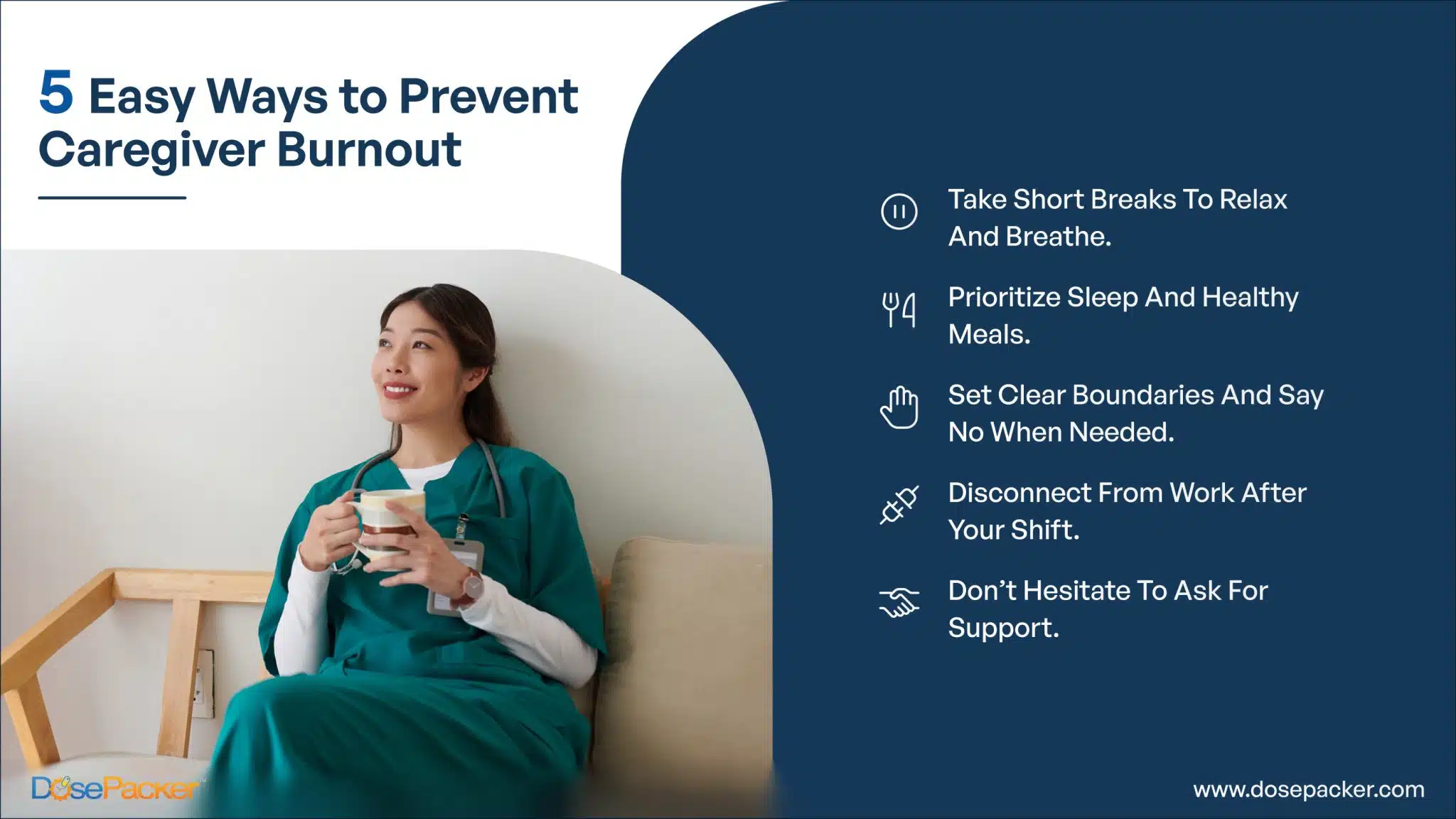
You don’t need a full day off to reset. Sometimes, a few minutes is enough.
In care environments where everything is fast-paced, it’s easy to neglect the basics. Make sure to:
It’s okay to protect your energy, even in a helping profession.
Even with good habits in place, caregiving can sometimes feel overwhelming. If you’re constantly overwhelmed, it may be time to ask for help, and that’s not a sign of failure. It’s a way to protect yourself and those you care for.
Here are signs that it may be time to seek additional support:
Support for caregiver burnout is available in many forms. Some are just a phone call or click away.
Keeping track of every dose and refill in your head adds to the mental strain, and over time, that pressure can lead to caregiver burnout. You don’t have to carry it all alone. Smart tools can ease the load by organizing complex med routines for you.
That’s where DosePacker comes in, with simple, reliable solutions designed to support caregivers:
Caregiving will always require a heart. But the right support can help protect your mind. With DosePacker’s innovative tools and medication management solutions, caregivers spend less time worrying about what’s next and more time being present.
Don’t Let Caregiver Burnout Drain Your Team

Caregivers are the heart of every care community. But when stress builds up and support is lacking, caregiving burnout becomes inevitable, and the entire team feels the ripple effect. Preventing that means more than just acknowledging the problem; it means creating systems that help caregivers feel valued, equipped, and cared for.
At DosePacker, we understand the day-to-day challenges caregivers face. That’s why we offer tools and solutions designed to ease your workload, reduce stress, and support more efficient, coordinated care. Because when you’re taking care of yourself, you show up with more energy and heart for the people who rely on you.